What’s New and What’s Next for Commercial HVAC

HVAC technology, regulations

New technology, regulations, and requirements are changing the HVAC game this year and into the future.
Here’s what to know.

New Refrigerant Requirements

In 2020, the American Innovation and Manufacturing (AIM) Act directed the Environmental Protection Agency (EPA) to phase down the consumption and production of refrigerants that have high Global Warming Potential (GWP) and high emissions of Hydrofluorocarbons (HFC) over a 16 year period. This directive is leading to a growing demand for refrigerants with low GWP HFC. Some refrigerants that meet the criteria currently exist in the marketplace, and additional options will be coming to market in the near future.

Meeting New HVAC Regulations

As of January 1, 2023, the U.S. Department of Energy (DOE) implemented new efficiency standards for commercial and residential HVAC equipment. These new regulations set updated efficiency standards for heat pumps and central air conditioning units, as well as gas furnaces. As a result, Construction and Facility Managers should be planning accordingly when upgrading or adding new HVAC equipment.

Duel-Fuel Heat Pumps

A hybrid heating system, known as a dual-fuel system, comprises both an electric heat pump and a gas furnace. It switches between the two devices based on the season, temperature, and required function to ensure optimal efficiency and effective heating and cooling of buildings throughout the year while maintaining high efficiency.

Energy Analysis Software

During the design phase of commercial HVAC system installation, Energy Analysis software is utilized. This software conducts a cost/benefit analysis to determine the most efficient steps to improve existing systems and achieve optimal energy efficiency.

MJ Daly’s service and maintenance programs include regular spring maintenance for all season changes.

Just give us a call: 800-992-3603

Shifting from Heating to Cooling

MJ Daly service van and worker

As the seasons change, so do your HVAC maintenance requirements. Taking proactive steps to prepare and maintain your equipment is critical to extend its lifespan and peak efficiency. Here are a few items to consider as we head into the warmer months of spring.

Replace Air Filters

Air filters clogged with dust and debris can contribute to poor air quality. If air has trouble passing through the filter, the system must work harder, causing additional strain on the equipment. That can lead to more energy consumption and increased costs.

Clean Outdoor Condenser Units

Debris, grass, and other materials can block the airflow of outdoor condensers, leading to inefficient operation and adding stress to HVAC equipment. Ensure the area around your condenser units is clear, and the vents are not blocked. Coils and fins should also be cleaned.

Indoor Component Cleaning

Blower fans, evaporator coils, and control panels should be thoroughly cleaned. Moving parts such as fans and motors need to be lubricated.

Check Refrigerant Levels

Your AC system should have the correct charge, or amount of refrigerant, to capture and release indoor heat. In addition, your system should be checked for any leaks.

MJ Daly’s service and maintenance programs include regular spring maintenance for all season changes.

Just give us a call: 800-992-3603
MCAA’s Advanced Leadership Institute

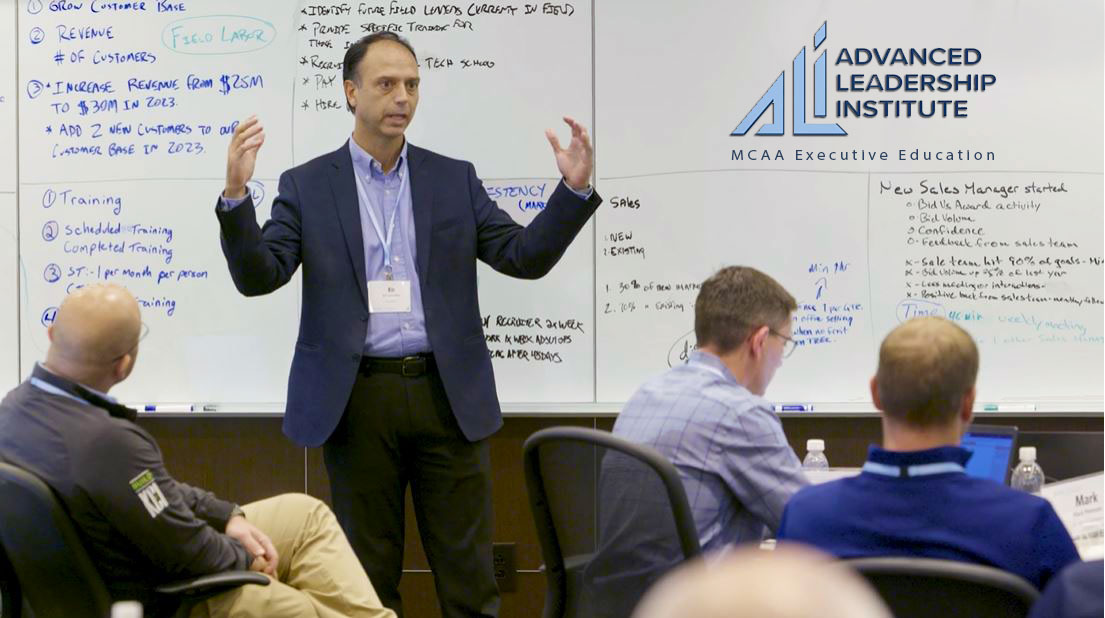
Edward G. Carvalho, MJ Daly’s speaks about his experiences at MCAA's Advanced Leadership Institute

Edward G. Carvalho, president, MJ Daly & ALI Member

​Mechanical Contractors Association of America’s  ALI develops the talents and business networks of leaders in the mechanical contracting industry in conjunction with UNC Kenan-Flagler Business School, ranked #2 in the country for ‘Executive Leadership Education’ and #1 in ‘Best Value for Professional Education.’

Learn more about ALI and listen to MCAA committee leadership, including MJ Daly’s Edward G. Carvalho, about their experiences. https://www.mcaa.org/advanced-leadership-institute-2023/

Sprinkler Systems & Paint Safety

Painted sprinkler heads

Fire safety system sprinkler components can get painted over time as painting crews disregard or are unaware of the importance of keeping them clear of any impediments. There is an industry debate on whether or not in-house maintenance crews should attempt to remove paint in these instances. There are no clear NFPA standards for doing so, but if damage occurs, as a result, you will be held liable.

Should this be the case in your building, it is essential that fire safety system professionals properly determine whether the components can be cleaned and how or if they need to be replaced. Avoid long-term issues or worse if a fire should take place in your building and the sprinklers do not work as they should – a costly and critical life-saving mistake.

MJ Daly’s experienced fire safety system professionals can inspect your sprinkler system and its components and guide you through any necessary steps.

Fire Sprinkler Inspections are of Critical Importance

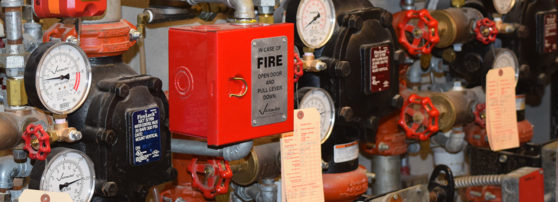
Fire sprinkler inspections

Inspecting and maintaining fire safety equipment is critical to running the systems effectively. Regular inspections will help identify issues that may need to be addressed and can help you get in front of problems that have the potential to get worse if they are not fixed. Since fire sprinklers are a life safety issue, this should be a top priority.

Key reasons to resolve inspection issues

Life Safety
Fire sprinklers in commercial buildings save lives. If a fire event were to occur and the equipment was not functioning correctly, a crucial system malfunction could occur. 

Property Damage
Fire is responsible for significant property damage across the country in commercial buildings every year. Costs can be astronomical. Equipment inspections and regular maintenance can help avoid issues. 

Code Compliance
Quarterly inspections are required to ensure the systems operate correctly during a fire emergency. Quarterly inspections include checking all flow and tamper switches for fire alarm activation, system pressures, sprinkler heads’ physical condition, and building use changes. 

Business & Tenant Disruption
A fire event can dramatically impact businesses and tenants. Significant loss of revenue can occur as a result of a fire when companies are put out of business. 

In addition to the standard inspections, MJ Daly also offers five and ten-year sprinkler system inspections and annual fire pump testing as required by NFPA 25. MJ Daly’s complete fire safety solutions include wet and dry pipe sprinklers, deluge systems, pre-action systems, standpipe systems, fire pumps, foam systems, Inergen and FM-200 systems, and above-ground systems water storage tanks, and underground fire mains and hydrants. We also offer the latest corrosion-preventative solutions with nitrogen generation equipment for wet and dry systems.